

Web Page Writing
Original Publish Date: 06/18/2025 by Anthony Madalone
Last Edited on: 06/18/2025 by Anthony Madalone
1. Make or Secure a Web Page Outline
DUH! You need an outline for a webpage to start writing it; otherwise, you’ll just be writing copy for a structure that may or may not match the layout of the page.
Need an outline to use? Check out this handy guide.
2. Consult Wordcounts
Unlike blogs — which seek to hit an overall word count for the entire post — web pages often have specific wordcounts associated with every section. Make sure you have an understanding of what those wordcounts are before you start writing, so you have an explicit idea of how much copy to include under each header.
If consulting from a wireframe, Chris will likely have explicit ideas in mind for a page’s wordcount; in these cases, it’s best to consult the bossman himself. If using a page template that’s already live onsite, however, you can get that information yourself. Simply copy and paste the existing copy within a section you’re emulating, post it in a doc, and find a word range.
Take the hypothetical VI Peel Toxbooster page, where we used this page for VI Peels as an example. Copy and paste the copy from the “What is VI Peel?” section:
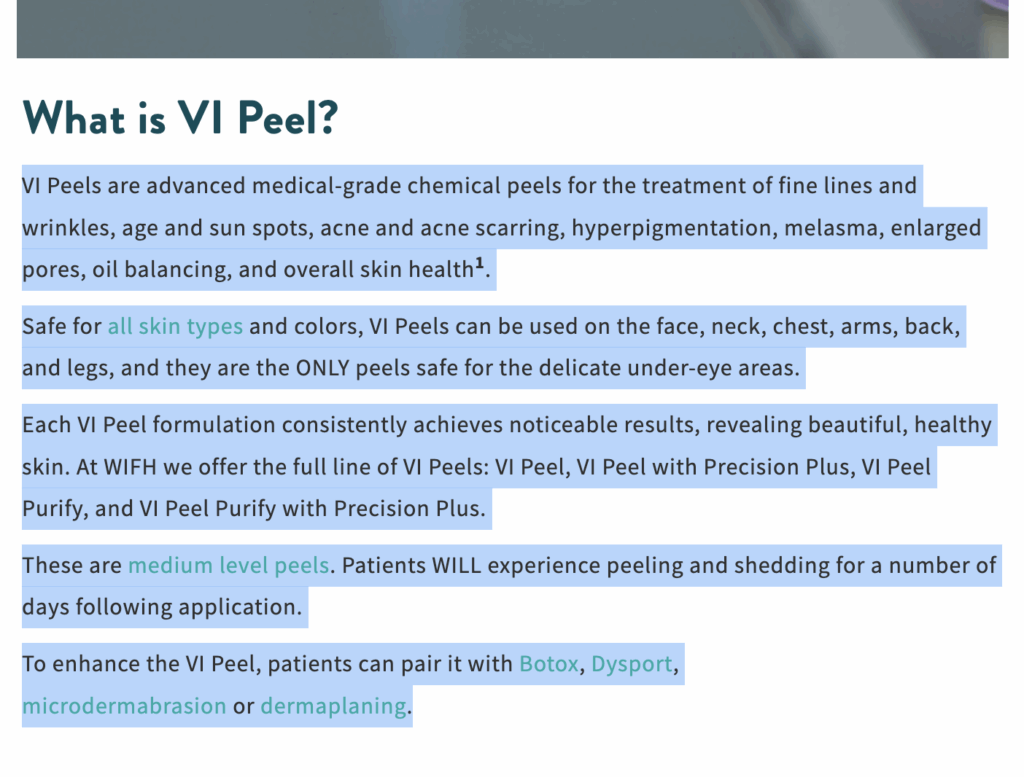
Copy and paste into your Google Doc, and find the wordcount:

Thus, the “What is VI Peel Toxbooster” section should be 150-200 words. Lather, rinse, repeat.
3. Figure Out Your Voice
As with blogs, webpage briefs and structure should tell you what you need to write, but not how you need to communicate such information; locking in on a brand voice is essential to web page copy writing. Things to consider before you start writing include:
- Formality: How formal is the brand in general?
- Target Audience: Who within the brand’s target audiences is this web page speaking to?
- Place in User Journey: Where in a target audience’s awareness with the brand are we communicating with them?
Using the VI Peel Toxbooster example, we can answer these questions as such:
- Formality: WIFH combines scientific insights with an approachable, patient-friendly tone.
- Target Audience: Users in Atlanta looking for VI Peel Toxbooster treatment, either entirely unfamiliar with the treatment, curious about how the treatment could help them, or seeking details on what an appointment might entail.
- Place in User Journey: General awareness about VI Peel Toxbooster treatment OR consideration about finding a place to book a specific appointment.
4. Write the Dang Webpage
You’ve got your brand voice, you’ve got your structure — now write the webpage!
In our blog writing guide, I mention the importance of using bulleted lists within copy at pretty much every opportunity. Do NOT overuse this within web pages! Bulleted lists will make some pages look very funky; your number one priority should be making the copy fit within wordcounts so it looks normal within the page’s layout.
There are some sections where word count matters less. For example, if the page has a dropdown menu for FAQs, write as much as you want! WIFH is a great example of this:

Otherwise, fitting to the page is paramount.
5. Implement Linking
With your page written, the last step before review is implementing internal linking. Landing pages are part of a greater overall user journey through a website, and as such usually have callouts explicitly meant for linking. Take Vital Living Healthcare’s website as an example:
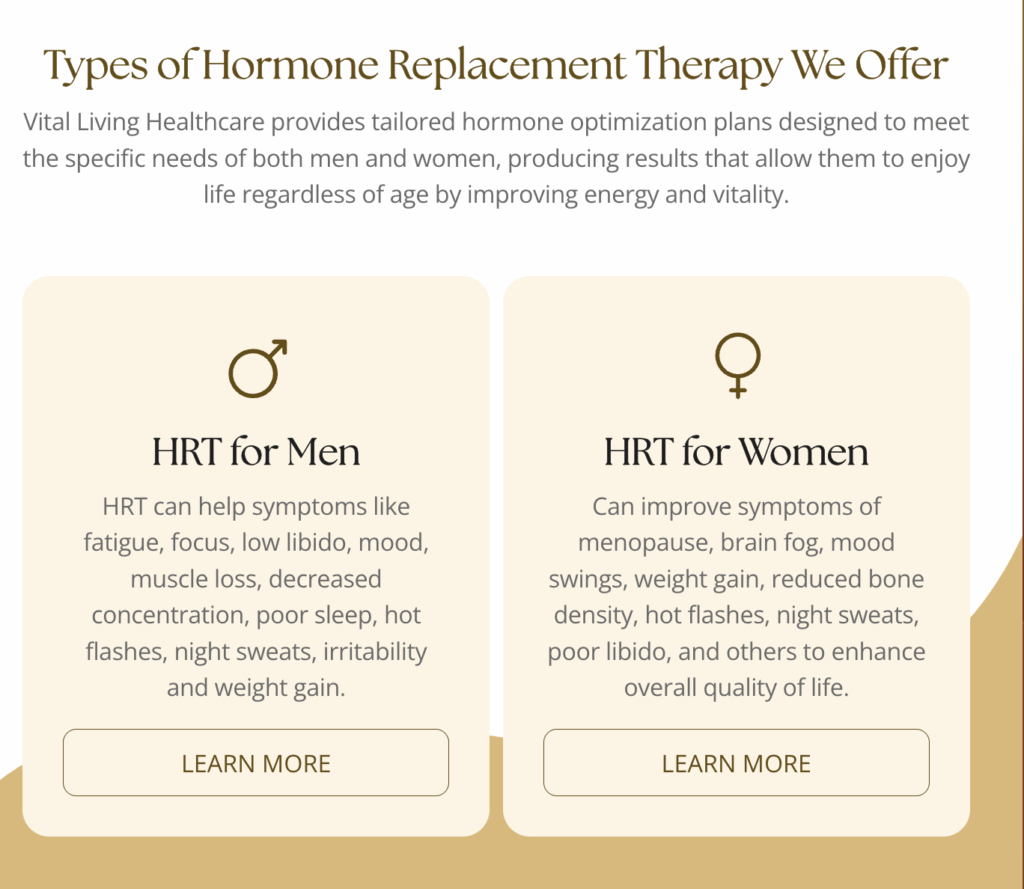
Obviously, you’d want to make sure these call-outs are linked to the appropriate on-site pages.
Other opportunities for linking may be less obvious, instead existing within the copy itself. Look at this example from WIFH’s VI Peel page:
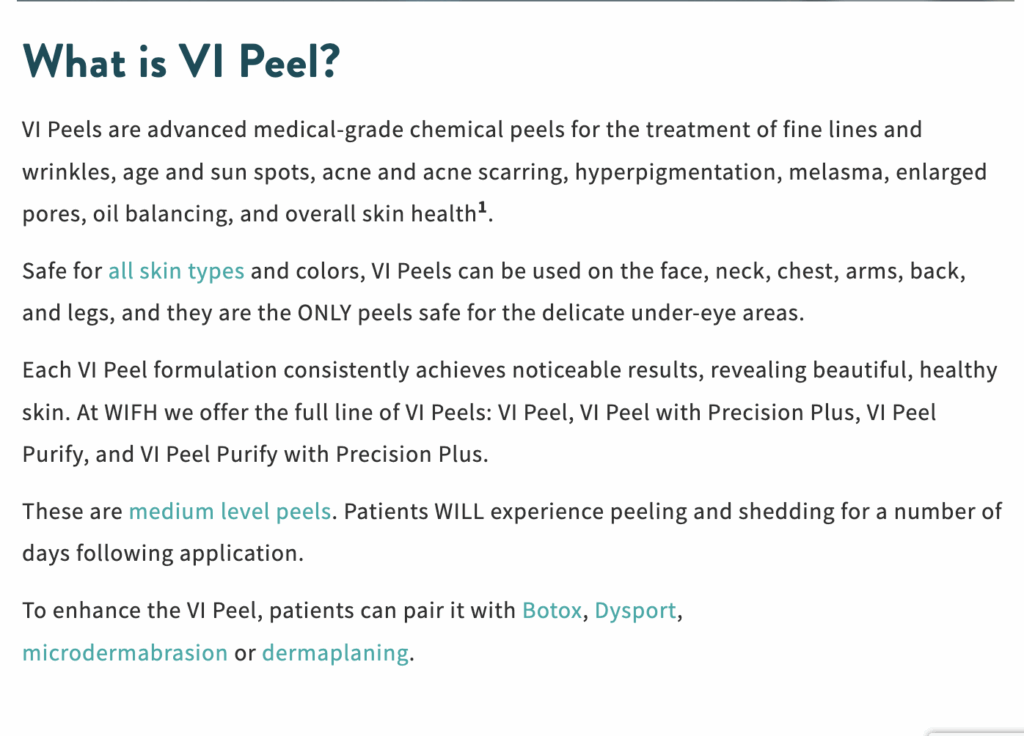
Look at all of those links! Opportunities for linking are everywhere for eyes to see. Once you implement those links, send the draft over to Chris; he’ll make sure your copy is where it needs to be and work with the designers to implement imagery.