

ChatGPT Content Writing
Original Publish Date: 06/18/2025 by Anthony Madalone
Last Edited on: 06/18/2025 by Anthony Madalone
1. Secure The Interview Transcript (If Applicable)
A lot of the time, when using ChatGPT to write content, we’re feeding the system a subject matter expert interview to supplement content. As mentioned within our SME Interview Process Document, it is ESSENTIAL to record SME interviews for future reference; this is one of the biggest reasons why.
Aja (the young GOAT) is usually on top of where these transcripts live, but most of the time you can access them yourself by going to the Google Calendar event for the SME:
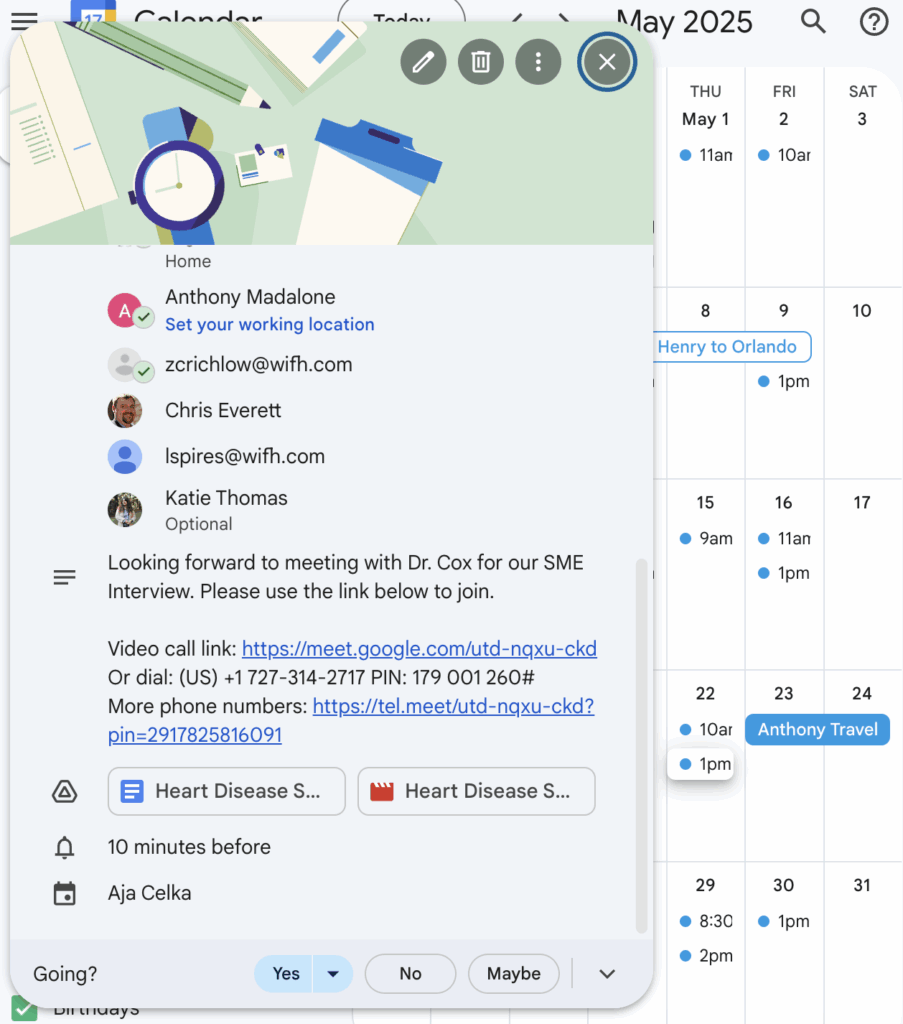
If creating ChatGPT based content from scratch, just skip to step 2.
2. Set Up the Prompt for ChatGPT
Next, it’s time to prepare a prompt for ChatGPT. Is ChatGPT the greatest writer in the world? HECK no. But it is AWESOME at consolidating information, making it an ideal partner for these SME exercises.
To set up the prompt, simply take the outline you’ve built out for whatever page you’re writing, set up the brand, and include the transcript. Let’s say we’re building out a Metabolic Syndrome page for Vital Living Healthcare using an SME interview. Your message to ChatGPT would look something like this:
I’m writing a landing page for Vital Living Healthcare to give a comprehensive view of Metabolic Syndrome. Fill in a landing page using the following headers:
What is Metabolic Syndrome?
Types of Metabolic Syndrome?
Symptoms & Causes of Metabolic Syndrome
Metabolic Syndrome Diagnosis
Metabolic Syndrome Treatment Options
Metabolic Syndrome Prevention
Metabolic Syndrome Prognosis
Based on the following interview transcript:
Nice! For AI writing assignments without SME interviews, I’d recommend getting more intentional with brand voice, target audience, and goals of the piece of content, including the full brief as needed. For example, if writing a brief for Lifecore, I’d say build a blog using the following brief:
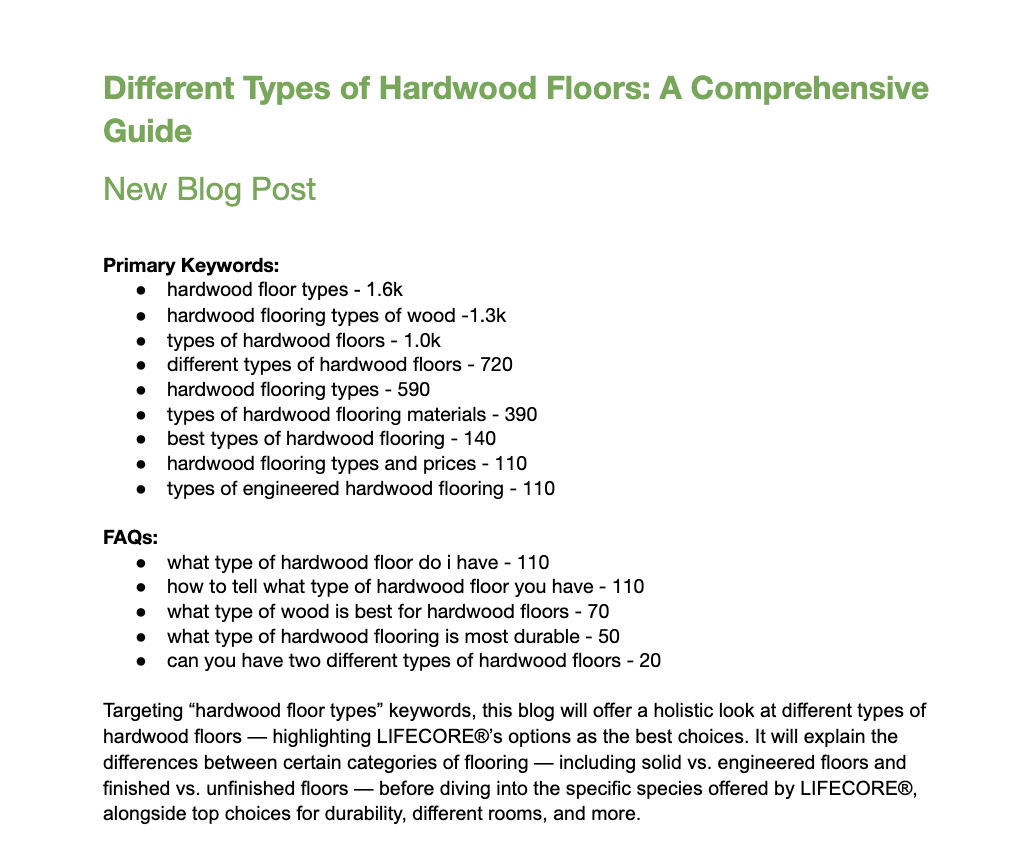
Outlining blog headers you’ve already built out based on the information found within the brief. Alternatively, you can feed ChatGPT the above brief and ask for a blog outline using that brief, and then get a first draft to expand on using the steps outlined below. This method, however, relies very heavily on ChatGPT; I’d recommend creating a blog outline yourself to ensure ChatGPT isn’t eating its own tail.
3. Peruse the First Draft and EXPAND
ChatGPT is a fickle beast; you never know what a first draft is actually going to look like. From my experience, however, ChatGPT almost always gives you less than what you need. Some blogs or web pages will have specific word counts for each section; even then, ChatGPT will occasionally ignore those requests, so you really gotta look out.
To counter this, go through your first draft and see any sections that seem scant for details, and ask the software to expand. For example, ChatGPT gave me this copy back for “Metabolic Syndrome Diagnosis”:
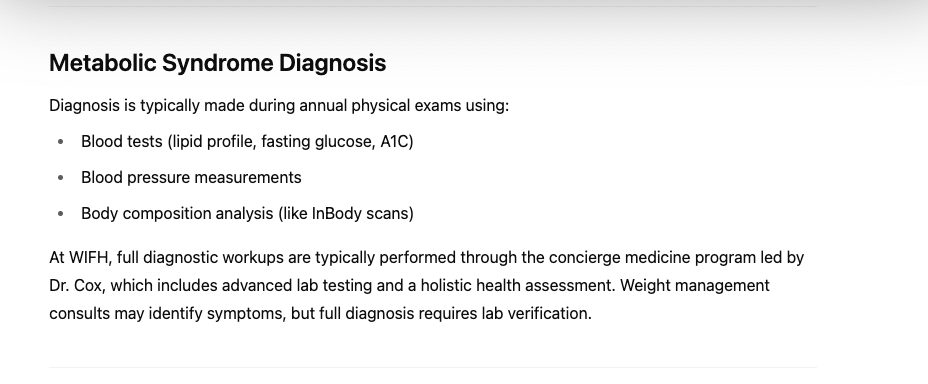
Pretty scant! I asked ChatGPT to expand on this section using information from the transcript, and ended up with this section:
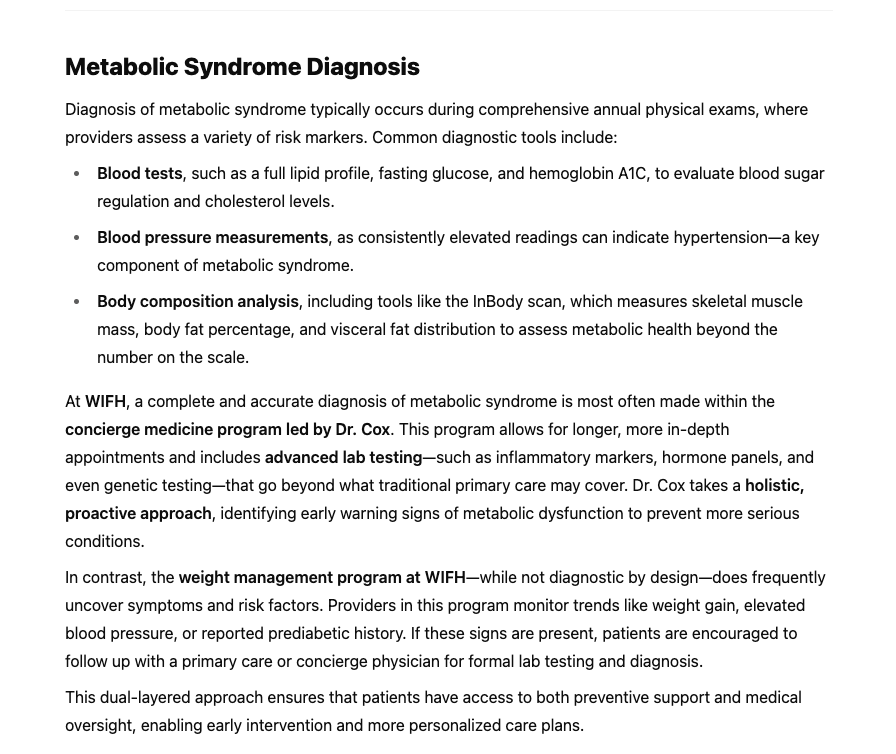
Now that’s what we’re talking about! For AI prompts not using SME interviews, ask to expand based on the brief outline and/or a link to the brand’s site.
4. Rewrite Jank
Once the content is the right length, you gotta read for that patented ChatGPT jank. Some things I notice often include:
- Em Dash Overuse: I LOVE a good em dash, but ChatGPT loves them too much. Cut a bunch of em out — especially when used in a parenthetical (see the above image “— while not diagnostic by design —”).
- Passive Voice: ChatGPT also overuses passive voice. Rework sentences when you see it!
- For example, see the first sentence in the image above. Change “Diagnosis of metabolic syndrome typically occurs during comprehensive annual physical exams, where providers assess a variety of risk markers” to “Providers typically diagnose metabolic syndrome during comprehensive physical exams, where they can assess a variety of risk factors”.
- Pronoun Trouble: ChatGPT will often be vague with nouns, substituting “they” or “it” in instances where a direct address is more appropriate. Clarify “they” and “it” into something specific and intentional as often as possible.
5. Cross-Reference the Transcript or Sources
Finally, after making the writing readable and lengthy, you have to make sure it’s actually accurate. Like a finance bro on an ayahuasca trip, ChatGPT loves to hallucinate. Check your freaking sources!
For content based on SME interviews, you can cross-check the interview itself; all of the details should be within the transcript, and if not find another source! Without an SME interview, you just have to cross-check everything. Can’t trust ChatGPT…don’t put our clients in authoritative jeopardy!