

Conducting Foundational Keyword Research
Original Publish Date: 06/17/2025 by Anthony Madalone
Last Edited on: 06/17/2025 by Anthony Madalone
1. Search For a BIG Keyword Term
Foundational keyword research is an expansive, dynamic exercise; every brand we work with is multi-faceted in what they offer, leading to many ways to first cut into the same “foundational keyword research” steak. For most projects, there’s no one real “right” way to start the process. In turn, don’t stress over picking the perfect term to start with.
To start, I’d recommend starting your keyword research with the broadest possible term you can think of. Again, don’t overthink it; once you plug that term into SEMRush, you’ll quickly discover other terms within that term, plus additional avenues for other related terms.
Let’s use Belgard for example. The most basic term possible for Belgard would likely be “pavers.” With that baseline, let’s just plug that term into SEMRush’s Keyword Magic Tool:

And check out the results:
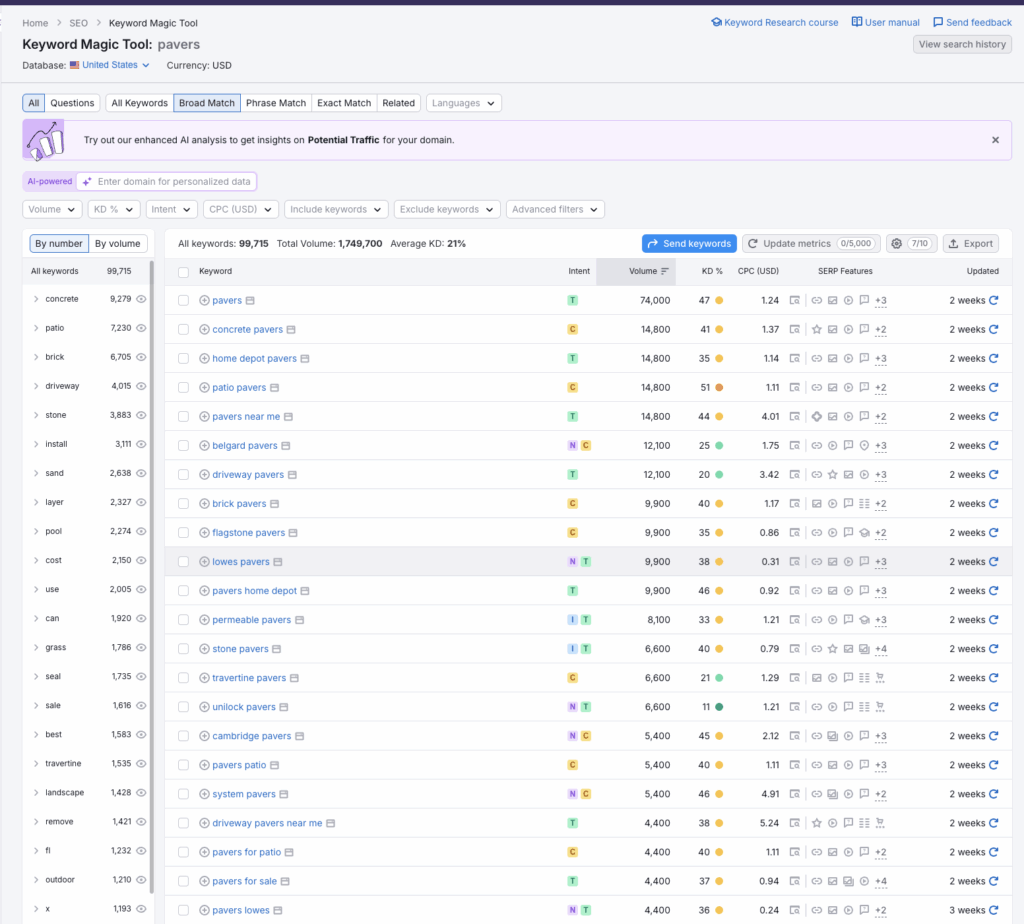
WOWZA! Look at all of those terms! That’s a freaking start.
2. Remove Irrelevant Terms and Make a List
Obviously, there’s a ton of terms for the basic query “pavers”. Way too many to target exclusively on one page. This is where we start to NARROW and CATEGORIZE!
a) Get Rid of Irrelevant Queries
The first step here is figuring out which terms aren’t relevant at all. For this search, the most apparent terms that aren’t relevant are branded “paver” terms that DON’T feature Belgard as the brand. There’s no reason to target the term”home depot pavers” for Belgard; pretty sure Home Depot has those locked up.
To streamline the rest of this process, I’d recommend excluding terms within the search you know you don’t want to rank for as such:
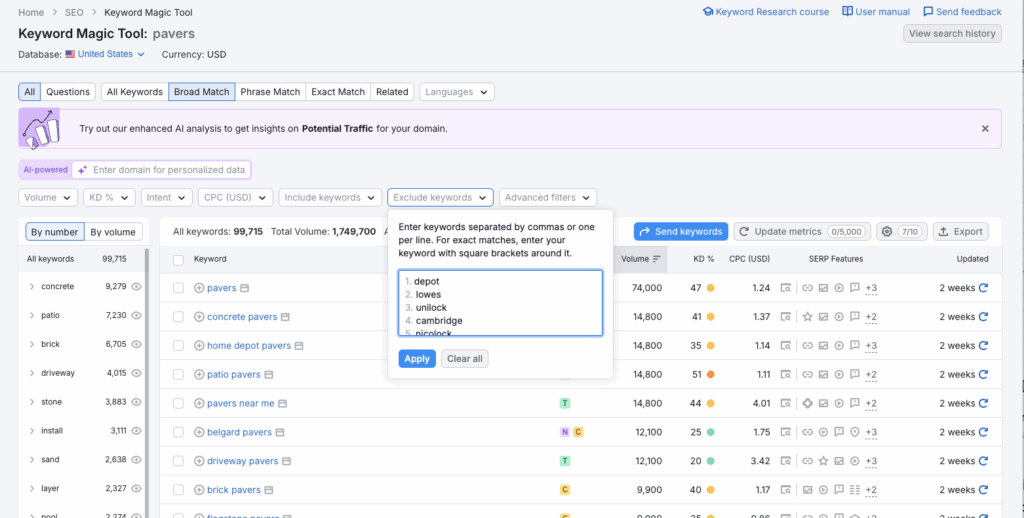
And get a much cleaner looking list:

b) Sort More Relevant Queries
Now that the list is more relevant, we can break down these terms into even smaller sub-groups. I’d start here by making a general list of pavers terms within SEMRush to get a bunch of these in the same place for future reference:

Once you create and add a bunch of terms, you can access that list by clicking on it, and see all of those terms you saved in one place.
3. Dive Deeper on Specific Terms…
Now it’s time to dig deeper. When a term has thousands of searches per month, it will almost always have dozens of sub-keywords to dig into as well. For example, lets dive deeper on the term “patio pavers”:

Holy moly! Another term with THOUSANDS of keywords! This is another good place to start, but even here tons of these terms have different search intent.
4. …and Then Dive Even Deeper!
This is where it gets really fun. Within these groups, there are even more categories to dig into. Creating smaller subclusters of keywords is key (no pun intended) to building actual high-ranking pages and blogs. Focusing on smaller keyword groups is essential to foundational keyword research, and involves segmenting based on a variety of factors, including:
- Specific sub-types of a keyword: For example, patio pavers come in a wide variety of materials. Materials within this search include:
- Brick patio pavers
- Stone patio pavers
- Concrete patio pavers
- Content-based queries: Many keywords lend themselves directly to content; some of them are essentially blog titles within themselves. Some examples for “patio pavers” include:
- Patio pavers ideas
- Patio designs with pavers
- Cleaning patio pavers
- FAQ-based queries: These find themselves…literally. You can narrow it down within SEMRush specifically for “Questions.” Make them their own group!
These are where we can start building lists that are actually functional and actionable within foundational optimization. As an example, let’s search for “patio pavers ideas”:
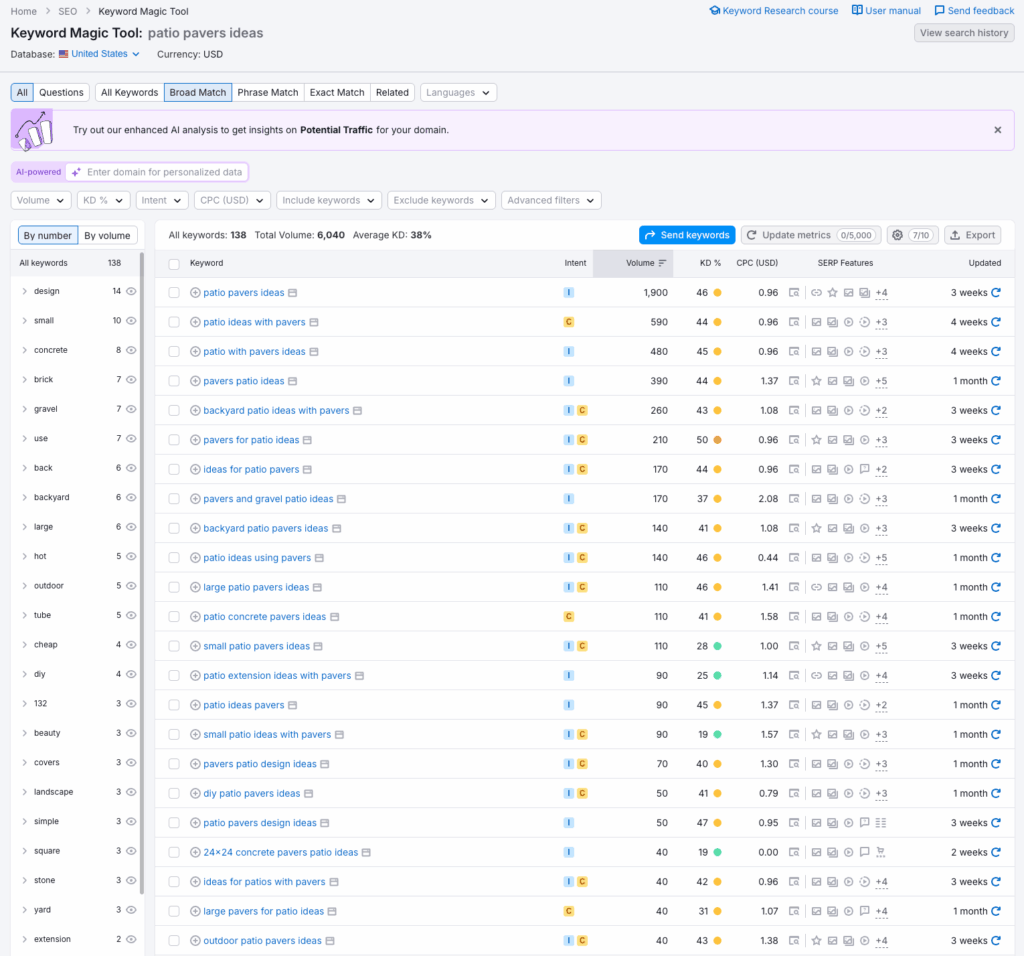
And make an actual list:

BAM! Now we’re cooking with keyword segmentation gas!
5. Export & Prepare to Present
So you’ve been cooking up smaller lists. You’ve made a ton of sub-categories, and have a strong foundational base for the website. What the heck is next?
Well, that depends! Foundational keyword research can be used for a whole suite of things, including site-mapping, content strategy, and ad hoc optimization. Sometimes, leaving these lists in SEMRush and referencing them within the software is enough.
Many times, however, foundational KWR will be linked to a larger presentation to a client. In these cases, I’d recommending exporting your lists:

Copy and pasting relevant information into a Google Sheets:

And repeating as needed.